
Introduction
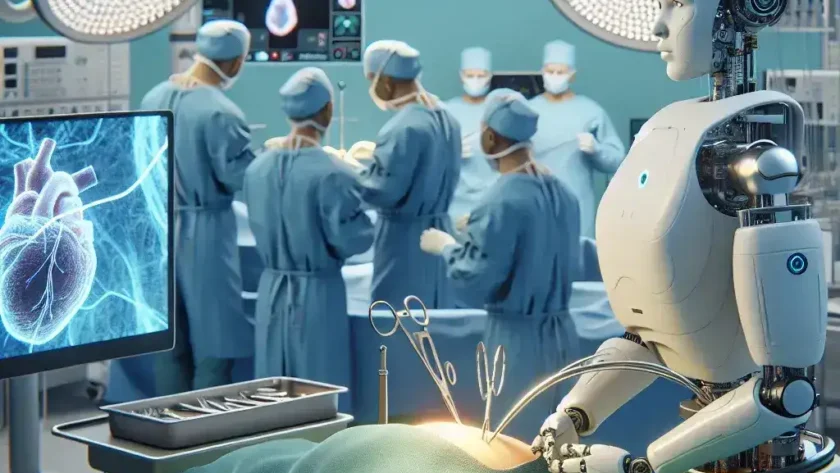
Imitation learning has emerged as a transformative approach in the field of robotics, particularly in surgical applications. By enabling robots to learn from human demonstrations through video, this methodology is reshaping the landscape of surgical procedures. This article delves into the nuances of imitation learning in surgical robots, exploring its historical context, current applications, challenges, and future implications.
Understanding Imitation Learning
Imitation learning refers to a machine learning paradigm where an agent learns behaviors by observing and imitating expert actions. In the realm of robotics, especially surgical robots, this approach is pivotal. The traditional methods of programming robotic systems are often rigid and do not adapt well to the complexities of human skills, making imitation learning a significant innovation.
Historical Context
The roots of imitation learning can be traced back to early developments in artificial intelligence and robotics. Initial attempts focused on direct programming, where engineers painstakingly coded every movement. However, as surgical procedures grew increasingly intricate, the limitations of this approach became evident.
The Shift to Learning from Demonstrations
The evolution towards imitation learning gained momentum with advancements in machine learning techniques. As algorithms became more sophisticated, researchers began exploring ways to allow robots to learn from video footage of surgical procedures. This shift not only enhanced the performance of surgical robots but also significantly reduced the time required for training.
Applications in Surgical Robotics
Imitation learning has found extensive applications in various surgical fields, including laparoscopic surgery, orthopedic procedures, and robotic-assisted surgeries. The ability to learn from video demonstrations allows these robots to replicate complex maneuvers with precision.
Case Study: Laparoscopic Surgery
Laparoscopic surgery is a minimally invasive procedure that requires high precision and dexterity. Surgical robots equipped with imitation learning algorithms can analyze video footage of expert surgeons performing laparoscopic techniques. This analysis enables the robots to understand the nuances of hand movements, instrument handling, and spatial awareness.
Benefits of Imitation Learning in Surgical Robots
- Enhanced Precision: Robots can replicate intricate surgical maneuvers with high accuracy.
- Reduced Training Time: Learning from video allows for faster adaptation to new techniques.
- Scalability: Once trained, robots can perform a wide variety of procedures without additional programming.
- Consistency: Robots provide a consistent level of performance, reducing variability in surgical outcomes.
Challenges and Limitations
Despite its advantages, imitation learning in surgical robots is not without challenges. The following are some key limitations:
Data Quality and Quantity
The effectiveness of imitation learning is heavily reliant on the quality and quantity of training data. High-quality video footage of expert surgeons is essential for training robots effectively. However, obtaining such data can be challenging and resource-intensive.
Generalization Issues
Another significant challenge is the robot’s ability to generalize learned behaviors to new scenarios. Surgical procedures can vary significantly based on patient anatomy and specific circumstances, which may require adaptability beyond what was demonstrated in training videos.
Future Prospects
The future of imitation learning in surgical robots appears promising, with ongoing research and technological advancements aimed at overcoming current limitations. Here are some potential future developments:
Integration with Virtual Reality
Combining imitation learning with virtual reality (VR) technology could allow for the creation of immersive training environments where robots can learn from real-time demonstrations. This synergy has the potential to enhance the training process significantly.
Reinforcement Learning
Incorporating reinforcement learning techniques could enable surgical robots to refine their skills through trial and error, further enhancing their capability to adapt and perform complex tasks in dynamic environments.
Conclusion
Imitation learning in surgical robots trained by video represents a revolutionary advancement in the field of surgical technology. By facilitating the acquisition of complex skills through observation, this methodology enhances the precision and efficiency of surgical procedures. As research continues to evolve, the integration of imitation learning with emerging technologies promises to overcome existing challenges and unlock new possibilities for the future of robotic surgery.